
Can Hermes Agent Audit a Live Website? Testing VibeLeak MCP End to End
We connected Hermes Agent to VibeLeak's remote MCP, tested the live public website path against Cloudflare.com, and separated what works anonymously from what requires owner authorization.
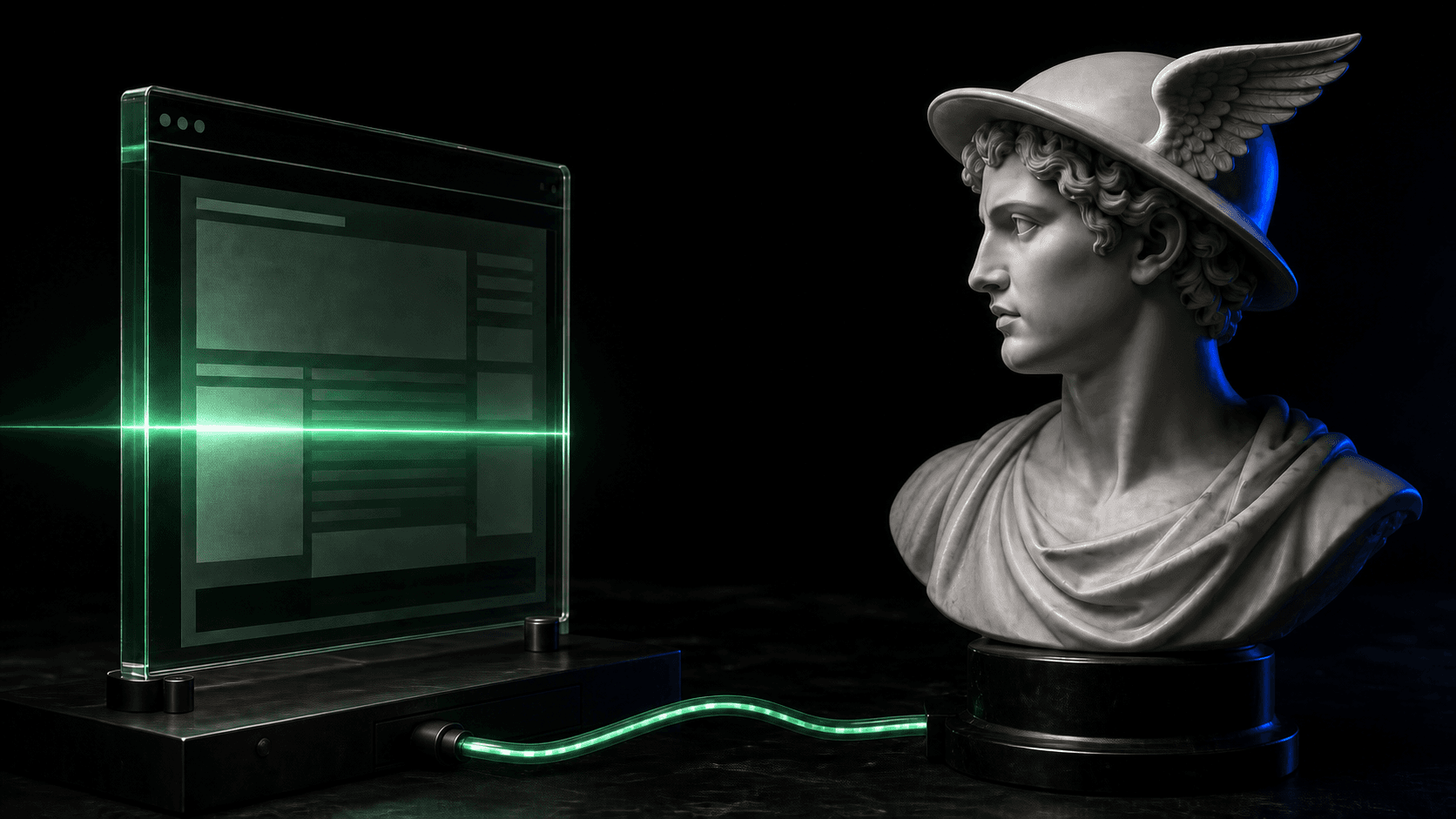
The test
A live agent needs live security context
Hermes Agent can reason, remember, and use tools. VibeLeak gives it a structured view of the website surface an attacker can inspect right now.
Most AI security demos begin inside a repository. That is useful, but production truth lives somewhere else too. A deployment can publish a missing security header, a stale cloud reference, an exposed AI key pattern, or a route that does not behave the way the source code suggests. If the agent never looks at the live site, it starts with an incomplete map.
So we tested a more practical question: can Hermes Agent connect to the VibeLeak MCP, inspect a real public website signal, and receive output that is ready for the next security action?
Short answer
The test path, without the demo theater
We used Cloudflare.com as a recognizable third-party target, exposed no private improvement details, and separated connection evidence from model-provider behavior.
Live website
Public attacker view
VibeLeak MCP
17 tools discovered
Hermes Agent
Remote MCP client
Actionable output
Signal, Markdown, next step
Hermes Agent is an open agent from Nous Research with persistent memory, reusable skills, multiple messaging surfaces, and support for external tools through MCP. Its MCP client supports remote HTTP servers, tool discovery, per-server filtering, and OAuth. That makes it a natural operator for VibeLeak: the agent handles the workflow while VibeLeak supplies current public-surface evidence.
The VibeLeak server is a production Streamable HTTP MCP endpoint. Hermes only needs one server entry:
mcp_servers:
  vibeleak:
    url: "https://www.vibeleak.app/api/mcp"
    auth: oauth
From there, hermes mcp test vibeleak checks the server registration and transport. The important detail is that an agent run has four separate layers: the model provider, the Hermes runtime, the MCP transport, and VibeLeak authorization. A provider quota can stop a model response while the MCP server is still healthy. Likewise, a working transport does not grant private access. Treating those layers separately makes debugging faster and keeps security claims honest.
Measured, not imagined
What the live VibeLeak MCP returned
This capture used the same remote MCP path configured for Hermes and ran the public VibeSignal workflow against https://cloudflare.com on July 22, 2026.
Tool inventory
17
5 public
12 owner
Bright cells are callable without owner credentials. Dark cells remain visible but locked.
58
Partial signal
Cloudflare.com
17 / 17
Checks
Public assessment completed
3
Private details
Correctly redacted
READY
Markdown
Agent-ready export
Endpoint reached
VibeLeak answered over Streamable HTTP.
PASSTools discovered
Five public tools and twelve owner-scoped tools were advertised.
17Connection checked
The server reported an anonymous session with no owner privileges.
PUBLICCloudflare.com checked
The public VibeSignal returned Partial Signal with Markdown ready.
58Owner capability checked
Full scanning stayed unavailable until authentication.
LOCKEDTool discovery returned 17 capabilities. Five are public and twelve are owner-scoped. We then called get_connection_status and get_vibesignal_and_export for Cloudflare.com. Both completed. The session was correctly identified as anonymous, and VibeSignal returned 58 out of 100 with the label Partial Signal. All 17 public checks completed, the three underlying improvement details stayed redacted, and vibesignal-report-cloudflare.com.md was ready for an agent to consume.
The 58 is an AI-visibility signal, not a security grade and not a claim that Cloudflare is vulnerable. It measures public discoverability, content access, bot control, protocol discovery, and commerce signals. The more important result was the state boundary: public evidence was useful enough to begin triage, while scanDomain remained false. The server did not confuse tool discovery with authorization or leak private details into an anonymous conversation.
Five public tools, twelve owner actions
An AI agent should be able to understand what exists without silently gaining access to what is private.
PUBLIC / 5 TOOLS
Useful before login
- Connection and capability status
- Public grade cards and VibeSignal
- Redacted Markdown export
- Trust Index visibility status
OWNER / 12 TOOLS
OAUTH OR SCOPED KEYPrivate by design
This is the trust loop in concrete terms. Anyone can ask for a redacted public grade, a VibeSignal, or Trust Index visibility because those describe the outward-facing site. An authenticated owner can run a fresh domain scan, retrieve private findings, request remediation actions, export the complete Markdown report, run VibeRank, or enable Score Watch.
Why this matters for AI agent security
The full owner workflow
Authenticate once, give Hermes a precise operating brief, and make the final rescan part of the definition of done.
Confirm connection and access
Call get_connection_status first. Record whether the session is public or owner-authenticated before asking for sensitive work.
Capture the deployed surface
For a domain you own, prefer scan_domain_and_export so the fresh scan and structured Markdown arrive in one operation.
Separate signal from root cause
Use AIGuard, CloudLeak, security headers, and other findings as external evidence. Ask Hermes to connect each signal to the relevant repository or deployment configuration.
Implement the smallest safe change
Patch the code or platform configuration, preserve the evidence trail, and run the project tests before deployment.
Deploy and rescan
A code diff is not the finish line. Re-run VibeLeak against the public domain and confirm the signal is gone. Use Score Watch for ongoing drift detection.
Copy this into Hermes
Use the VibeLeak MCP to audit a website I own.

Target: https://example.com

1. Call get_connection_status and state the current access level.
2. If owner-authenticated, run scan_domain_and_export.
3. Group findings by AIGuard, CloudLeak, security headers,
   exposed files, and other public-surface signals.
4. For each finding, identify the likely code or deployment cause,
   propose the smallest safe fix, and list how to verify it.
5. Do not expose raw tokens, private keys, or full secret values.
6. Return a reviewable change plan before modifying anything.
7. After deployment, rescan the live domain and compare the result.

If the session is public only, use get_vibesignal_and_export,
explain what remains redacted, and stop before owner-only actions.
Where Hermes plus VibeLeak earns its keep
The workflow is strongest when shipping speed creates distance between what the team intended and what the internet can actually see.
- Vibe-coded apps where AI-generated routes, environment handling, and cloud configuration changed faster than the security checklist.
- Solo founders who need a repeatable website security scanner workflow without pretending an agent is a full security team.
- Agencies that want an agent-ready handoff from live-site evidence to the developer responsible for the fix.
- Teams using several AI models that want one model-agnostic MCP security tool instead of rebuilding integrations for every agent.
- Operators who need continuous checks for public drift after a clean launch or migration.
VibeLeak is useful here because its signals map to mistakes fast-moving teams actually ship. AIGuard looks for exposed AI key patterns. CloudLeak surfaces risky cloud references and public configuration. Security-header checks show browser protections that are absent or weak. VibeSignal gives an instant public score, while the complete Markdown export gives Hermes structured evidence instead of a screenshot or a vague instruction to make the site secure.
What this test does not prove
A good end-to-end test should make its boundary as visible as its success state.
VibeLeak scope
PUBLIC
It inspects the deployed attack surface, not private source code.
Agent scope
CONTEXT
Hermes needs authorized repository and deployment access to implement fixes.
Proof point
RESCAN
The live site must confirm that a deployed fix changed the public signal.
This is not a penetration test, and the public walkthrough did not run a private owner scan against Cloudflare. It verified server reachability, tool discovery, connection status, a live public VibeSignal assessment, redaction behavior, a Markdown handoff, and the owner gate. The authenticated flow adds deeper security findings and actions, but it should run only against assets you own or are authorized to test.
Also, neither side should claim victory from a proposed patch. VibeLeak shows the outside symptom. Hermes can help trace and change the inside cause. Your tests, review process, deployment controls, and final live rescan remain part of the job.
Run the loop
Give your agent a view from outside the repo
Start with the public signal, authenticate when you need owner evidence, and keep the rescan attached to the fix.
Catch the leak before it leaks you
Hermes Agent and VibeLeak MCP FAQ
The connection, access, and scope questions worth answering before an agent touches a live workflow.
Can Hermes Agent connect to VibeLeak?
Yes. Hermes supports remote HTTP MCP servers. Add the VibeLeak endpoint to the Hermes MCP configuration and use OAuth or a scoped bearer key for owner-only tools.
Can an anonymous agent see private findings?
No. Public tools return redacted outward-facing signals. Private findings, scan history, remediation actions, complete exports, VibeRank, and Score Watch require owner authorization.
Does this replace repository security review?
No. VibeLeak provides the public attacker view. Repository analysis explains the internal cause. The best workflow connects both, implements a reviewed fix, and proves the result with a live rescan.
Is the VibeLeak MCP tied to one model?
No. MCP is the integration boundary. Hermes is model and provider agnostic, and VibeLeak can also be used by other compatible agents and developer tools.
Sources and test notes
Product context: the official Hermes Agent documentation, its MCP feature guide, the MCP configuration reference, and the live VibeLeak MCP manifest. Test figures were captured from VibeLeak's production Streamable HTTP MCP endpoint against Cloudflare.com on July 22, 2026. The Cloudflare name is used only to identify the public test target; the VibeSignal result is not a vulnerability assessment or endorsement. VibeLeak is not affiliated with Cloudflare, Nous Research, or Hermes Agent.
Next action
Run the scanner against your own site
The article lands hardest when it turns into a fix list. Scan, close the gaps, and recheck.
Continue reading
More field notes
Security
GPT-5.6 Sol + Codex Security: Scan Outside, Fix Inside
Turn a VibeLeak public-surface scan into a structured security handoff for Codex Security and GPT-5.6 Sol to validate and patch.
Open articleWorkflow
AI agents are checking your website now. Here is the VibeSignal readiness checklist
Search is becoming conversational, agentic, and more selective about what it can understand. This is the practical checklist for making your public website easier for AI agents to find, read, use, and verify.
Open articleSecurity
Business impersonation is the trust problem your website has to help solve
Impersonation scams are no longer just fake emails. They are polished websites, lookalike domains, copied badges, and AI-generated conversations. Your real website needs to make verification easier than the scam.
Open article